Product Data

Introducing the Product Truth SLA
Product data drives every transaction in B2B commerce, yet most organizations treat it as content instead of operational infrastructure. A Product Truth SLA establishes measurable standards for accuracy, completeness, and synchronization across ERP, PIM, ecommerce, EDI, and supplier systems. By mapping data flow upstream and enforcing service-level commitments around pricing, availability, lead time, and compliance attributes, manufacturers and distributors can prevent costly errors, protect margins, and build lasting customer trust.
B2B Commerce
Product Data

When a Distributor’s ERP Knows the Truth but the Website Doesn’t
Even disciplined distributor environments experience breakdowns when ERP truth fails to propagate consistently across ecommerce, middleware, and order systems. ERP mismatch leads to manual intervention, pricing exposure, and fragile order flow. This post explains the technical patterns behind truth drift and how to reduce it.
Distribution
Product Data

Why Manufacturers Need Product Truth SLAs in 2026
Manufacturers already manage SLAs for shipping, quality, and service. In 2026, the bigger risk is information. Product Truth SLAs define how quickly manufacturers can detect changes, approve new truth, and publish it consistently across every channel that represents their brand.
Manufacturing
Product Data

Normalize to Monetize: How AI Cleans Up Product Data for Manufacturers
Messy, inconsistent product data slows digital growth. This article shows how AI-driven taxonomy normalization helps manufacturers clean, structure, and monetize their data for scalable digital success.
AI
Product Data
Manufacturing

Comparing Enterprise DAM Platforms: Sitecore Content Hub, Frontify, Bynder, and More
Modern DAM platforms are no longer just repositories for marketing assets. They have become operational systems that govern workflows, product content, AI-assisted metadata, brand consistency, and omnichannel content delivery. This article compares leading DAM platforms including Sitecore Content Hub, Frontify, Bynder, Optimizely DAM, and Adobe Experience Manager Assets through the lens of enterprise governance, workflow orchestration, AI capabilities, and real-world operational fit.
B2B Commerce
Product Data
Digital Strategy
Why Programmatic Pricing, Availability, and Constraints Matter in B2B Ecommerce
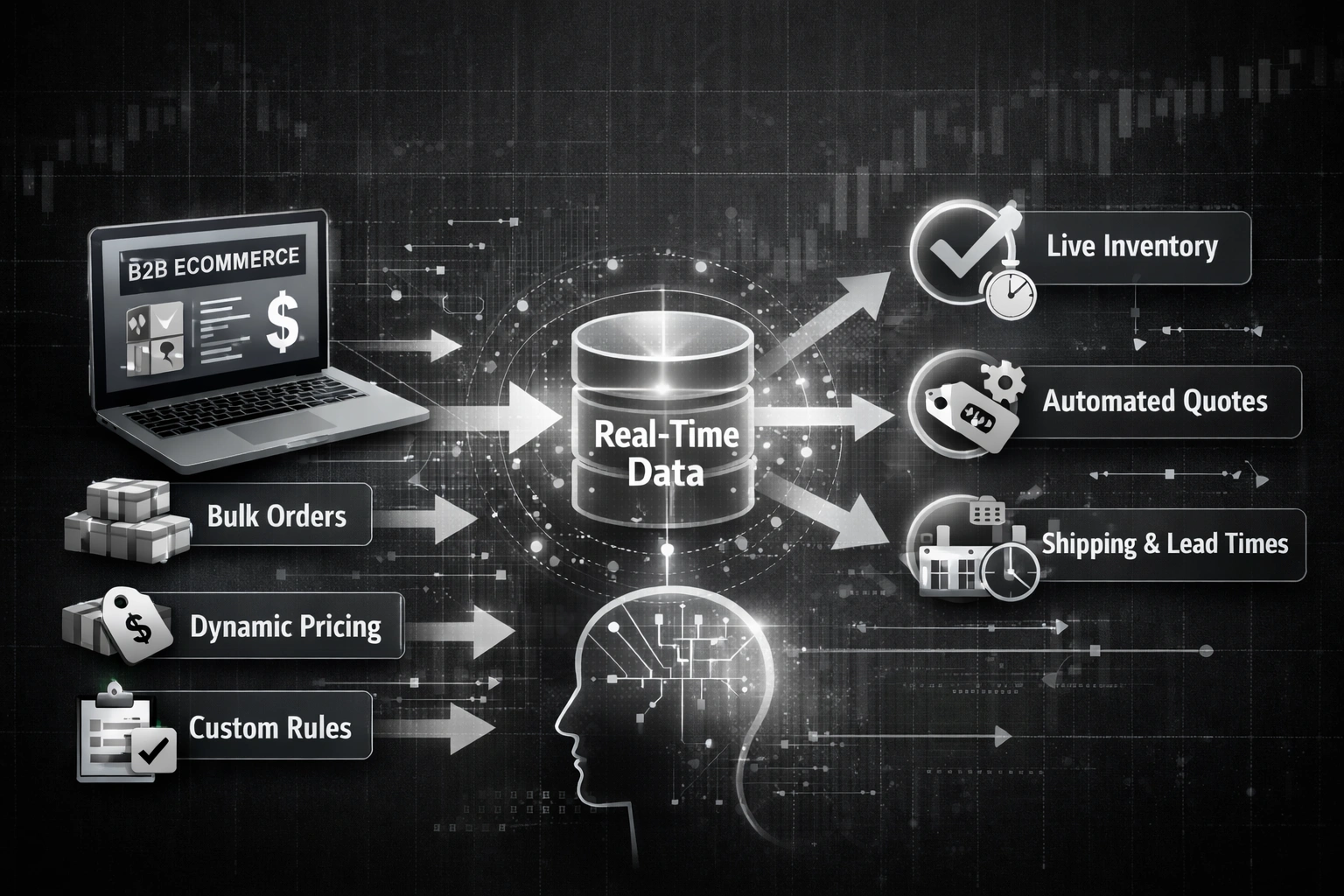
In B2B ecommerce, pricing, availability, and constraints are not just fields on a product record. They are the programmatic promises your business makes to buyers and the systems that buy on their behalf. When those signals are inconsistent across web, APIs, punchout, and EDI, the fallout shows up as misquotes, backorders, order holds, and expensive manual exception handling.
This article explains why manufacturers should treat these three signals as a unified “orderability” decision, exposed deterministically and with traceability. You will learn how a simple Orderability Contract helps align channels, reduce disputes, and make self-service buying reliable at scale.
B2B Commerce
Product Data
Helping Clients with Product Data
Learn how Layer One helps clients enhance product data quality, from taxonomy and brand pages to ERP integration, improving eCommerce performance and customer experience.
Product Data
14 Focus Points
Auto Sync Product Data Feeds to PIM
Manual product data imports waste time and create errors. This guide shows how to auto-sync AD, Syndigo, 1WorldSync, and DDS feeds into PIMs like inriver, with a real client example and config snippets you can adapt.
Product Data
B2B eCommerce

Product Data Quality (Focus Pt. 3)
Product data quality determines how easily customers find, understand, and buy from you. Learn how to improve accuracy, completeness, and findability to boost B2B eCommerce performance.
14 Focus Points
Product Data
MDM or PIM for B2B?
Poor product data holds back B2B eCommerce. This article explains the differences between MDM and PIM, their roles in product data quality, and how manufacturers and distributors should decide between them.
Product Data